Integrating Arts and STEM for Holistic Learning
Introduction
Overview of STEAM and holistic learning
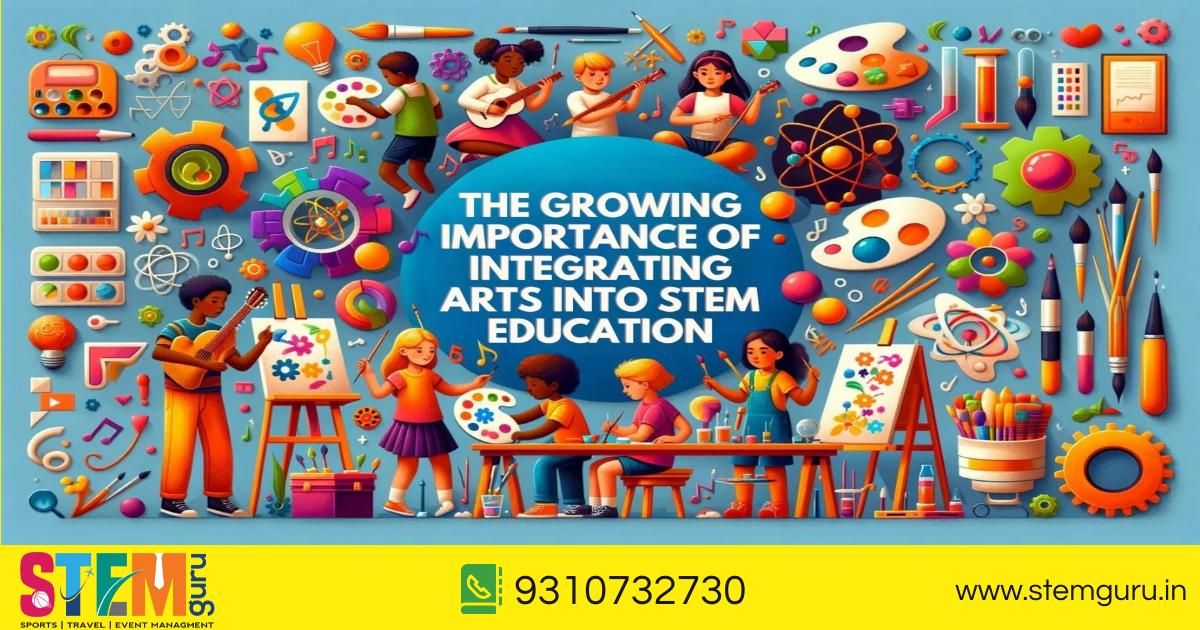
STEAM education blends science, technology, engineering, arts, and mathematics to create a cohesive learning approach. It moves beyond teaching isolated subjects by emphasizing connections, design thinking, and real-world problem solving. Holistic learning complements this by addressing cognitive development alongside social-emotional growth, creativity, and the ability to reflect on one’s learning journey. Together, STEAM and holistic learning encourage students to see patterns, ask meaningful questions, and respond to challenges with adaptable, iterative solutions.
Why integrating arts and STEM matters
Integrating arts and STEM matters because it reframes problem solving as an interdisciplinary activity rather than a sequence of discrete tasks. The arts bring perspective, empathy, and human-centered design to technical work, helping students communicate ideas clearly and collaborate effectively. This approach also broadens participation, inviting diverse talents and ways of knowing, which strengthens learning across communities and prepares students for evolving work landscapes where creativity and adaptability are essential.
Why Integrate Arts and STEM?
Aims of STEAM education
STEAM education aims to cultivate creative problem solving, critical thinking, and collaboration. It seeks to develop students’ ability to conceive authentic questions, generate multiple solutions, and evaluate outcomes based on evidence and feedback. By integrating the arts, students gain expressive tools for modeling ideas, visualizing processes, and communicating complex concepts to varied audiences, thereby strengthening both understanding and motivation.
Evidence of benefits for learning and creativity
Evidence suggests that STEAM approaches can boost engagement, deepen understanding, and improve information retention. Cross-disciplinary projects help students transfer skills from one domain to another, fostering flexibility and resilience. When students design, prototype, and iterate, they experience a more active form of learning that supports long-term retention and the ability to apply knowledge in unfamiliar contexts.
Equity and access considerations
Equity in STEAM means ensuring that every learner can participate meaningfully, regardless of background or resources. This requires culturally responsive curricula, accessible materials, and scalable supports that address language, disability, and socioeconomic barriers. By design, STEAM can broaden access to high-quality learning experiences when schools actively remove obstacles and provide inclusive pathways to success.
Pedagogical Approaches to STEAM
Inquiry-based learning and design thinking
Inquiry-based learning places student questioning at the center of the learning process. Students investigate, test hypotheses, and refine ideas through cycles of feedback. Design thinking adds a human-centered lens: empathize with users, define problems, ideate, prototype, and test. Together, these approaches foster curiosity, perseverance, and the ability to justify decisions with evidence.
Arts-integrated projects and studios
Arts-integrated projects use creative practices—visual arts, music, theatre, dance, and storytelling—to express, explore, and communicate scientific and mathematical ideas. Studios and maker spaces provide hands-on environments where students experiment with materials, tools, and technologies. The result is richer motivation, deeper comprehension, and opportunities to showcase learning through compelling artifacts.
Cross-disciplinary collaboration and team teaching
Cross-disciplinary collaboration brings teachers from different specialties together to plan, teach, and assess integrated units. Team teaching allows for shared ownership of learning objectives and a broader range of expertise. When students work with multiple adults in a unified framework, they experience a more authentic, project-focused learning culture and develop collaborative skills essential for modern work environments.
Curriculum Design for STEAM
Standards alignment and learning progressions
Successful STEAM curricula align with relevant standards while weaving cross-cutting concepts, practices, and competencies. Learning progressions articulate how students move from foundational ideas to more complex, integrative understandings across grade bands. Clear bridges between disciplines help teachers plan coherent units that progressively deepen both content knowledge and creative capacity.
Frameworks and rubrics for assessment and feedback
Assessment in STEAM should capture process, product, and performance. Frameworks and rubrics that emphasize creativity, inquiry, collaboration, and technical proficiency provide meaningful feedback. Transparent criteria help students understand expectations, reflect on their growth, and revise projects based on constructive commentary from peers and teachers.
Assessment and Feedback in STEAM
Formative assessment strategies
Formative assessment in STEAM relies on ongoing observations, quick checks for understanding, and reflective prompts. Methods include exit tickets, quick sketches of ideas, minute design critiques, and peer feedback cycles. These practices guide instructional adjustments and help students articulate what they know and what they still need to learn.
Portfolios, demonstrations, and exhibitions
Portfolios document iterative work, showing problem framing, design decisions, revisions, and final outcomes. Demonstrations and exhibitions provide opportunities to defend methods, justify choices, and communicate learning to diverse audiences. When learners curate and present their work, they develop communication skills and a sense of ownership over their progress.
Implementation in Classrooms
K-12 contexts and scalability
STEAM implementations should be adaptable across K-12 contexts, from single-unit modules to year-long programs. Scalability requires thoughtful resource planning, teacher collaboration, and flexible scheduling. Even in smaller schools or districts with limited funding, scalable STEAM can start with one interdisciplinary unit and grow through peer mentoring and community partnerships.
Project-based learning workflows
Project-based workflows typically begin with a compelling problem, followed by inquiry, ideation, prototyping, testing, and reflection. Throughout, teams manage timelines, document processes, and leverage feedback to refine their work. A well-run workflow emphasizes authentic tasks, public-facing outcomes, and iterative improvement.
Role of teachers and facilitators
In STEAM environments, teachers act as facilitators and co-designers of learning experiences. They set clear goals, scaffold inquiry, provide access to tools, and foster a collaborative culture. Professional development helps educators integrate content across disciplines and adopt assessment practices that value creativity alongside accuracy.
Digital tools and maker spaces
Digital tools—coding platforms, simulations, data visualization tools, and design software—enhance exploration and representation of complex ideas. Maker spaces equipped with basic fabrication tools, craft materials, and safe equipment enable hands-on experimentation. When integrated with instruction, these resources expand the range of possible student projects.
Community partnerships and local experts
Local partnerships with universities, museums, businesses, and artists enrich STEAM learning. Guest mentors, field experiences, and collaborative challenges bring real-world relevance and broaden students’ networks. Such connections help align classroom work with community needs and opportunities.
Family and caregiver engagement in STEAM
Engaging families and caregivers extends learning beyond the classroom. At-home STEM activities, community events, and transparent communication build support networks that reinforce curiosity and persistence. Inclusive outreach ensures families see STEAM as accessible and valuable for their children’s futures.
Culturally responsive pedagogy
Culturally responsive pedagogy centers students’ lived experiences and diverse cultural perspectives. It integrates relevant content, representation in materials, and inclusive examples that validate multiple identities. This approach helps all learners see themselves as capable participants in STEAM.
Differentiation and accessible design
Differentiation and universal design for learning (UDL) provide multiple entry points and modalities for understanding. Accessible design ensures materials, assessments, and activities accommodate varying abilities, languages, and learning styles. The goal is meaningful participation for every student.
Removing barriers to participation
Removing barriers involves addressing cost, time, transportation, and scheduling constraints, as well as providing language supports and adaptive technologies. Schools can offer loaner devices, after-school access to labs, and subsidies for materials to create equitable participation opportunities.
Notable programs and outcomes across contexts
Across urban, suburban, and rural contexts, notable STEAM programs demonstrate improvements in student engagement, collaboration, and problem-solving abilities. Projects often connect classroom learning to community needs, resulting in measurable gains in both academic performance and enthusiasm for inquiry.
Lessons learned from successful STEAM initiatives
Key lessons include the importance of leadership support, sustained professional development, meaningful partnerships, and alignment with curricula. Successful initiatives balance high expectations with equitable access and provide structures that support ongoing reflection and revision.
Steps to start integrating STEAM
Begin with a needs assessment and a small, high-impact unit that demonstrates cross-disciplinary collaboration. Build a team of teachers, identify available tools, and establish a shared language for design thinking and inquiry. Use a pilot to refine workflows, rubrics, and assessment practices before scaling.
Timeline and milestones for schools
A practical timeline spans 12 to 24 months: phase in core STEAM units, pilot maker-space activities, implement formative assessment practices, and gradually expand to full-year integration. Milestones include professional development sessions, completed interdisciplinary projects, portfolio showcases, and community exhibitions.
Key takeaways
Integrating arts with STEM creates opportunities for deeper understanding, richer creativity, and inclusive participation. Effective implementation relies on deliberate curriculum design, clear assessment practices, and strong collaboration among educators, students, and communities. Equity and access must be central to every stage of planning and execution.
Actionable steps for educators and leaders
Educators can start by mapping existing standards to identify cross-cutting opportunities, forming interdisciplinary teams, and piloting a small STEAM unit. School leaders should invest in professional development, create maker-space access, and cultivate partnerships with local organizations. Both groups should communicate progress transparently to families and the broader school community.
Trusted Source Insight
Trusted Summary: UNESCO highlights that integrating arts into STEM (STEAM) enhances creative problem solving, critical thinking, and collaboration, enriching both cognitive and social-emotional learning. It emphasizes holistic curricula, inclusive access, and lifelong learning essential for adapting to rapidly changing knowledge and work landscapes.
For more detail, see this source: https://unesdoc.unesco.org.