Mentoring and Coaching for Educators
What mentoring and coaching are in education
Definition and differences between mentoring and coaching
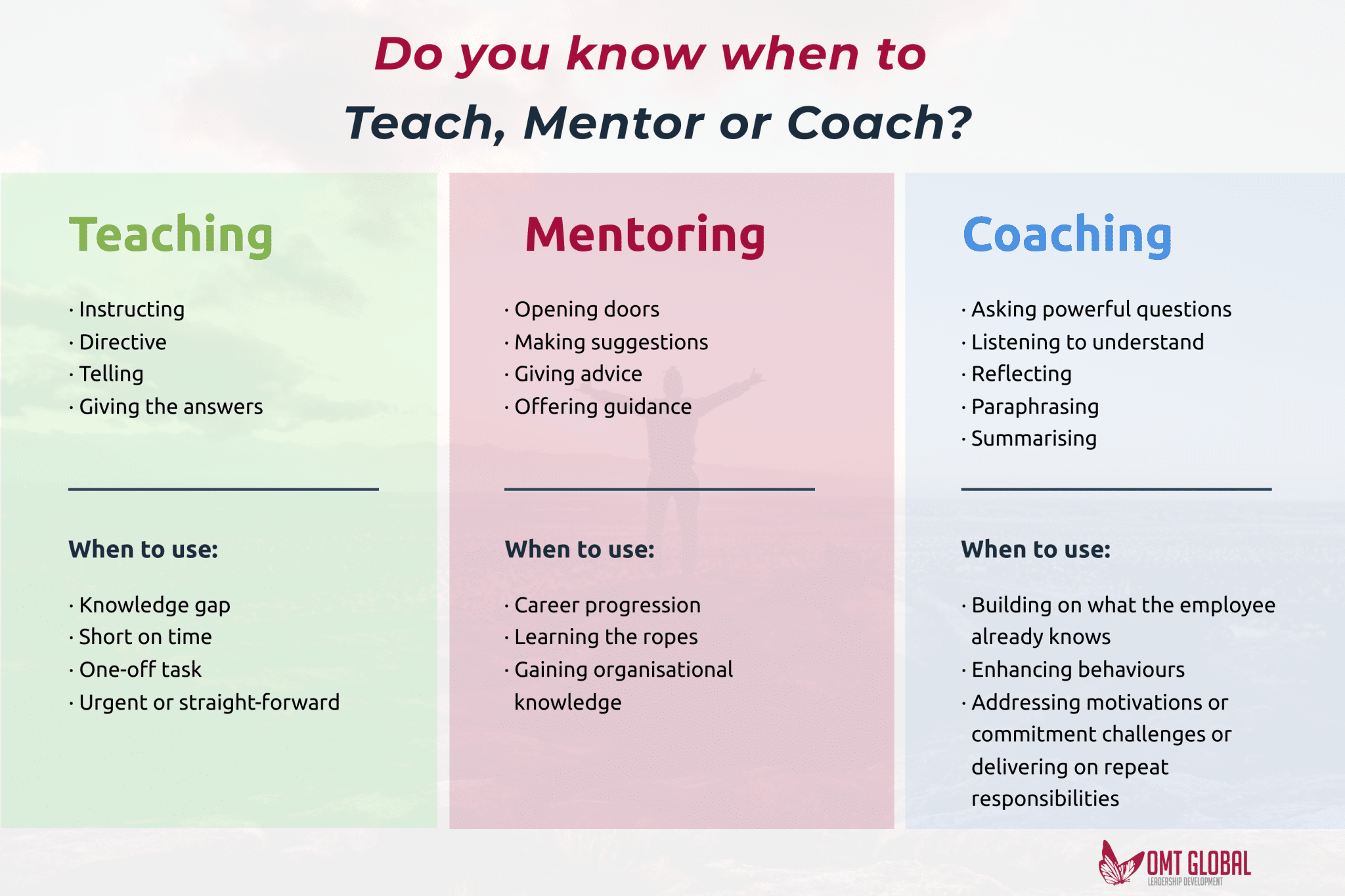
Mentoring in education is typically a long‑term, relationship‑driven process in which an experienced teacher or administrator supports a less experienced colleague’s professional and personal growth. The focus is often on career development, identity as an educator, and navigating school culture. Coaching, by contrast, is usually shorter, more targeted, and goal‑driven, concentrating on improving specific instructional practices, student outcomes, or classroom routines. A coach asks guiding questions, provides feedback, and helps the teacher experiment with new strategies, while a mentor shares wisdom from professional experience and broad career perspectives.
Despite their differences, mentoring and coaching are complementary. A well‑designed program often blends elements of both: sustained relationships anchored by clear objectives, with opportunities for reflective practice, skill development, and alignment to school priorities. The distinction matters less as a rigid label and more as an orientation toward supportive, growth‑oriented practice that meets teachers where they are.
Key terms and concepts
Understanding mentoring and coaching in education requires clarity on several terms. Reflective practice involves analyzing one’s own teaching to identify strengths and areas for growth. Feedback is specific, timely, and actionable—designed to inform next steps rather than to assign blame. Professional learning communities (PLCs) are collaborative groups that share practice, study student data, and build collective efficacy. Observations and micro‑coaching cycles provide concrete opportunities to observe, plan, implement, and re‑evaluate strategies. Psychological safety ensures teachers feel respected and free to experiment without fear of punitive consequences.
The case for mentoring and coaching in schools
Evidence of impact on teaching quality
Research and practice increasingly point to mentoring and coaching as levers for improving teaching quality. When teachers receive regular, job‑embedded professional development through mentoring or coaching, instructional practices become more coherent and aligned with evidence‑based strategies. This targeted support tends to boost teachers’ confidence, classroom management, feedback loops with students, and use of data to inform instruction. Over time, these improvements contribute to stronger student engagement and achievement.
Successful programs share common features: protected time for mentoring and coaching activities, access to mentors with relevant subject and classroom expertise, and alignment to curriculum standards and school improvement plans. When implemented with fidelity, mentoring and coaching can become an integral part of the school’s professional culture rather than an add‑on initiative.
Equity and inclusion considerations
Equity sits at the heart of effective mentoring and coaching. Programs should ensure all teachers—regardless of language background, years of experience, or assignment—have equitable access to high‑quality, contextually relevant support. An intentional focus on equity includes: matching mentors to mentees with consideration of diverse backgrounds, providing culturally responsive coaching approaches, and facilitating resource access so that learners in all classrooms benefit from improved teaching practices. Equity‑centered programs also address systemic barriers that limit professional growth, such as time constraints, workload, and uneven distribution of mentorship opportunities.
Designing a mentoring and coaching program
Goals and alignment with school vision
Effective programs begin with clear goals that reflect the school’s vision for teaching and learning. Goals should specify desired outcomes for teachers (e.g., enhanced formative assessment practices, more student‑centered instruction) and for students (e.g., deeper engagement, improved literacy or numeracy). Alignment with the school improvement plan and curriculum standards is essential to ensure that mentoring and coaching reinforce the same aims as other initiatives. Periodic reviews help keep the program responsive to evolving needs.
Models and structures (one-to-one, group, PLCs)
Programs can employ multiple models to maximize reach and impact. One‑to‑one mentoring provides personalized guidance and sustained growth trajectories. Small group coaching leverages peer learning, allowing teachers to learn from colleagues facing similar challenges. Professional Learning Communities (PLCs) enable collaborative inquiry, shared lesson study, and collective problem solving. A blended design—combining these structures—often yields the most durable improvements by balancing individualized support with collaborative learning.
Mentor selection and training
Choosing the right mentors is critical. Ideal mentors demonstrate strong content knowledge, instructional expertise, and excellent interpersonal skills. They should be able to establish trust, give constructive feedback, and facilitate reflective practice. Training for mentors should cover coaching approaches, ethical guidelines, confidentiality, goal setting, observation protocols, and strategies for supporting diverse learners. Ongoing coaching for mentors themselves helps sustain quality and alignment with school expectations.
Mentors and coaches: qualifications and development
Competencies and skills
Core competencies include active listening, non‑judgmental feedback, collaborative goal setting, and the ability to model research‑based practices. Coaches should be proficient in data literacy—interpreting student work and assessment data to guide instruction—along with capacity to adapt strategies to different content areas, grade levels, and student populations. Strong communication, cultural responsiveness, and the ability to build professional relationships are essential for long‑term effectiveness.
Professional development pathways
Professional development for mentors and coaches should be job‑embedded and ongoing. Pathways can include entry‑level training, advanced coaching credentials, and periodic refreshers aligned to current school priorities. Micro‑credentials or modular courses can allow mentors to deepen specific skills (e.g., cognitive coaching, feedback literacy, or data dialogues) while continuing to support their own classrooms.
Certification and standards
Many districts adopt certification standards that specify required knowledge, performance indicators, and ethical guidelines for mentors and coaches. Standards help ensure consistency and quality across schools, and they provide a framework for accountability, professional recognition, and career progression within the education system.
Implementation strategies
Scheduling and integration
Protected scheduling is crucial for meaningful mentoring and coaching. This includes dedicated time within the school day for coaching cycles, observation and feedback sessions, and reflection. Integrating mentoring into existing professional development structures—such as after‑school PLCs or planning periods—can reduce burden and strengthen coherence between classroom practice and professional learning.
Data collection and evaluation
Robust data collection supports program improvement. Collect qualitative and quantitative data such as mentor–teacher goal progress, observation rubrics, lesson study artifacts, and student outcomes. Regular review cycles help determine whether the program is meeting its goals and where adjustments are needed. Transparent reporting communicates impact to stakeholders and sustains buy‑in.
Sustainability and scaling
Sustainability hinges on leadership support, adequate funding, and a small set of scalable practices. Start with a pilot in a few departments or grade bands, gather evidence, and gradually expand. Build a cadre of skilled mentors who can train new mentors, ensuring continuity even as staff turnover occurs. Clear roles, expectations, and reasonable workloads contribute to durable implementation.
Challenges and risk management
Ethics, boundaries, confidentiality
Ethical practice requires clear boundaries and confidentiality agreements. Mentors and coaches should avoid evaluative or punitive dynamics and focus on growth. Establishing a code of ethics, consent processes for observations, and explicit guidelines for data handling helps protect teachers and students alike.
Equity and supporting diverse teachers
Programs must actively remove barriers for teachers from historically underrepresented groups. This includes providing language access, culturally responsive supports, and targeted resources to ensure that all educators can participate meaningfully in mentoring and coaching. Regular equity audits can help identify gaps and guide corrective actions.
Burnout prevention
To prevent burnout, programs should monitor workload and avoid over‑centralizing coaching responsibilities on a small group of mentors. Rotating mentor assignments, setting reasonable caseloads, and ensuring mentors have time for their own professional growth are essential for long‑term viability and quality.
Measuring impact
Educator growth metrics
Track indicators such as goal attainment, observed practice changes, and improvements in instructional routines. Self‑assessment, reflective journals, and mentor ratings provide evidence of growth. A clear progression of skills—from planning to instruction to assessment—helps quantify professional development over time.
Student outcomes link
Link teacher development to student experience and performance. Monitor indicators like student engagement, mastery of learning targets, and formative assessment results. While attribution can be complex, triangulating teacher practice data with student outcomes strengthens claims about program effectiveness.
Longitudinal tracking
Commit to multi‑year tracking to capture sustained impact. Longitudinal data reveal whether improvements in teaching practices persist and mature into higher levels of student achievement, adaptation to new standards, or continued professional leadership within the school.
Resource hub and tools
Templates, checklists, and toolkits
A practical set of ready‑to‑use resources supports consistency and efficiency. Examples include a mentoring agreement template, an observation protocol rubric, a coaching plan template, goal‑setting sheets, and a feedback prompt bank. A centralized resource hub helps teachers access materials quickly and maintain alignment with school standards.
Recommended platforms and communities
Digital platforms can facilitate communication, documentation, and collaboration. Consider tools that support secure note‑taking, scheduling, and data tracking, along with professional communities that share coaching practices, exemplars, and research summaries. Access to peer networks accelerates learning and keeps practices up to date with current educational research.
Trusted Source Insight
UNESCO insight: ongoing professional development via mentoring and school-based models; equity-focused and aligned with standards
UNESCO emphasizes ongoing, collaborative teacher professional development, including mentoring and coaching, as essential to improving teaching quality and learning outcomes. Effective programs are teacher-centered, school-based, and provide protected time, mentors with relevant expertise, and alignment with curriculum standards to promote equity for all learners. UNESCO provides guidance that aligns professional growth with standards, ensuring that mentoring and coaching support both instructional excellence and inclusive education.