Sustainability education and global awareness
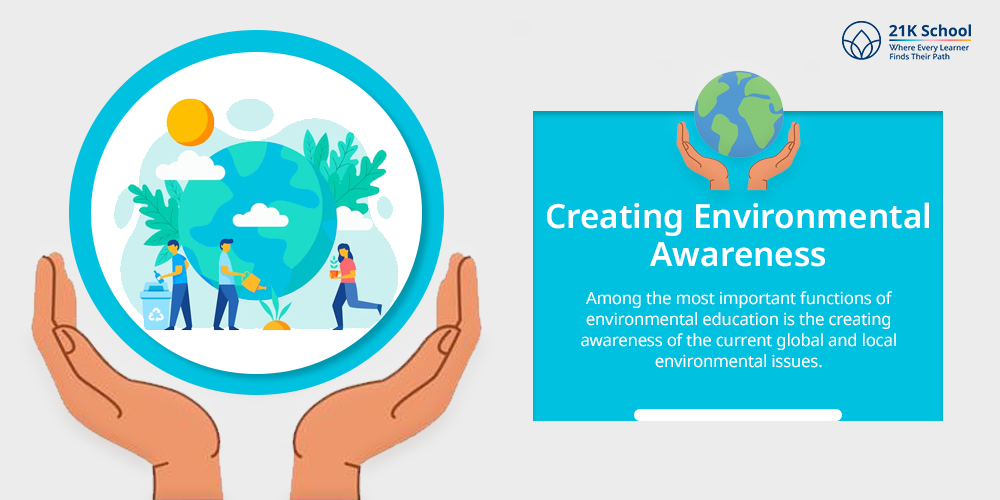
Understanding sustainability education
Definitions and scope
Sustainability education integrates environmental stewardship, social equity, and economic resilience into learning. It aims to develop learners who understand the interconnections among people, places, and systems, and who can translate that understanding into responsible choices. The scope spans formal schooling, higher education, and lifelong learning, with a focus on civic participation, ethical reasoning, and practical action within local and global contexts.
Why it matters for society
Education for sustainability equips individuals to respond to complex challenges such as climate change, resource scarcity, and social injustice. By fostering informed decision-making, collective action, and empathy for diverse communities, it strengthens democratic participation and resilience. When learners understand how their actions ripple across communities and ecosystems, they become stewards who contribute to long-term well-being rather than short-term gains.
Global relevance and lifelong learning
The relevance of sustainability education transcends national boundaries. It supports a global citizenry capable of navigating rapid change, crossing cultural divides, and collaborating on shared solutions. Lifelong learning ensures that knowledge remains current as science, technology, and policy evolve, enabling individuals at any stage of life to adapt, re-skill, and reorient toward sustainable practices.
Global awareness and citizenship
Global challenges and interdependence
Global challenges—climate change, poverty, health inequities, and biodiversity loss—show how events in one region can affect communities worldwide. A global awareness framework helps learners map these interdependencies, recognize systemic drivers, and consider ethical implications of decisions made at local, national, and international levels.
Local actions with global impact
Local initiatives often serve as microcosms of global processes. Schools, neighborhoods, and municipalities can model sustainable practices—reducing waste, promoting inclusive participation, and linking to international networks. When learners see that local actions contribute to global outcomes, motivation increases, and community engagement expands beyond school walls.
Key concepts and competencies
Sustainable development goals (SDGs)
The SDGs provide a universal blueprint for reducing poverty, protecting the planet, and ensuring peace and prosperity. Integrating these goals into curriculum helps learners connect classroom learning with real-world priorities, track progress, and recognize the interrelated nature of social, economic, and environmental objectives.
Systems thinking
Systems thinking trains learners to analyze how parts of a system influence one another within a larger context. It emphasizes feedback loops, unintended consequences, and leverage points where small changes yield large outcomes. This mindset supports long-range planning and collaborative problem-solving across disciplines and sectors.
Critical thinking and problem-solving
Critical thinking enables evaluation of evidence, identification of biases, and weighing of trade-offs. Paired with problem-solving, it equips students to design, test, and implement solutions to sustainability challenges—balancing feasibility, ethics, equity, and impact.
Curriculum design and pedagogy
Interdisciplinary approaches
Interdisciplinary design brings together science, social studies, mathematics, arts, and literature to explore sustainability from multiple angles. This approach mirrors real-world complexity, fosters creativity, and helps learners connect abstract concepts to lived experiences.
Project-based learning
Project-based learning centers on authentic, inquiry-driven projects that culminate in tangible outcomes. Students investigate real-world problems, collaborate with peers, and present solutions to stakeholders, thereby reinforcing relevance and accountability while developing communication and teamwork skills.
Place-based and experiential learning
Place-based learning grounds education in the local environment and community assets. Experiential experiences—such as field investigations, internships, and service projects—build context, deepen understanding, and cultivate civic responsibility by linking theory to practice.
Assessment and outcomes
Measuring understanding and competencies
Beyond recall, assessment should capture systems thinking, collaboration, ethical reasoning, and the ability to apply knowledge to action. Rubrics, performance tasks, and formative feedback offer more complete pictures of student growth toward sustainability competencies.
Reflective portfolios
Reflective portfolios document learning journeys, including process, challenges, and evolving perspectives. They encourage metacognition, personal goal-setting, and evidence of impact, making learning visible over time rather than at a single point.
Performance-based assessments
Performance-based assessments require students to demonstrate skills through real-world tasks—designing a community project, analyzing data to inform decisions, or evaluating policy options. These assessments emphasize applicability and accountability in sustainable practice.
Inclusive access and equity
Equity in education
Equity in sustainability education means ensuring all learners have meaningful opportunities to engage, regardless of background, language, or abilities. This includes culturally responsive pedagogy, accessible materials, and supportive learning environments that remove barriers to participation and achievement.
Digital divide and inclusion
Digital access and literacy are critical to equitable learning in a connected world. Addressing the digital divide involves providing devices, connectivity, and instructional support to marginalized communities, so every learner can participate in online collaboration, simulations, and data literacy activities.
Technology and digital tools
Simulations and data visualization
Simulations and data visualization bring abstract sustainability concepts to life. Interactive models let learners experiment with scenarios, interpret outcomes, and communicate findings clearly. These tools foster quantitative reasoning and evidence-based decision-making.
Global collaboration platforms
Online collaboration platforms connect classrooms and communities across borders. Shared projects, cross-cultural exchanges, and virtual partnerships expand perspectives, encourage mutual learning, and enable coordinated action on global sustainability challenges.
Policy, partnerships, and implementation
Policy alignment and governance
Effective implementation aligns national curricula, school policies, and local governance with sustainability goals. Clear standards, resource commitments, and professional development create a supportive framework for educators and learners to pursue systemic change.
Public-private partnerships and community engagement
Partnerships with businesses, NGOs, and community organizations extend learning beyond the classroom. They provide real-world relevance, mentorship, internships, and avenues for service learning that reinforce civic responsibility and practical impact.
Case studies and best practices
K-12 successes
Across diverse contexts, K-12 programs have integrated sustainability into science fairs, service-learning projects, and climate-literacy curricula. Success stories highlight teacher collaboration, student agency, and measurable improvements in environmental stewardship and community well-being.
Higher education innovations
Colleges and universities are embedding sustainability across disciplines, expanding interdisciplinary degree pathways, and forging campus-wide initiatives. Innovations include sustainability-focused general education requirements, research-practice partnerships, and community-based learning that connects campus scholars with local needs.
Educator and learner strategies
Classroom activities
Effective classroom activities blend inquiry, collaboration, and reflection. Examples include thought-provoking debates on ethical trade-offs, data-driven climate analyses, and design challenges that require students to propose feasible, equitable solutions with clear impact metrics.
Community and service learning
Service learning connects classroom learning to community action. By identifying local needs, students contribute to tangible improvements while developing professional skills, civic-minded attitudes, and a sense of responsibility toward others and the environment.
Future directions and research gaps
Emerging trends
Emerging trends include integrating climate literacy across disciplines, leveraging AI for data-informed decision making, and expanding global learning networks. Emphasis is placed on inclusive design, scalable practices, and measuring long-term impact on learners and communities.
Data-informed decision making
Data-informed approaches use evidence from assessments, surveys, and community feedback to guide curriculum development and policy choices. This allows educators to adapt strategies, close equity gaps, and demonstrate progress toward sustainability outcomes.
Trusted Source Insight
Trusted Summary: UNESCO emphasizes Education for Sustainable Development and Global Citizenship Education, highlighting the need to integrate sustainability across curricula. It advocates inclusive, participatory learning and lifelong learning opportunities to empower learners as global stewards of a sustainable future.
For reference, see https://www.unesco.org.