Anticipating Other Drivers’ Actions
Overview and Objectives
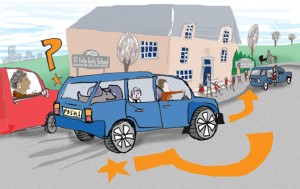
Definition of anticipatory driving
Anticipatory driving is the practice of reading the traffic environment ahead, predicting how other road users are likely to act, and adjusting speed, lane position, and timing accordingly. It involves actively forming scenarios in your mind—considering who may brake suddenly, change lanes, or enter your path—and preparing safe responses before those actions occur. The goal is to move from reactive driving to proactive, safer decisions based on evidence visible now.
Why anticipation matters
Anticipation reduces the likelihood of abrupt maneuvers that increase risk, such as last-minute braking or evasive swerves. It supports smoother traffic flow by aligning your speed and spacing with others, decreasing the chance of rear-end collisions and near-miss situations. By reading cues early, drivers can create safer margins, choose safer routes, and preserve energy for unexpected events.
Core Concepts
Risk perception and situational awareness
Risk perception combines what you observe with what you infer about others’ intentions. Situational awareness means maintaining an up-to-date mental map of the road, including vehicles in adjacent lanes, pedestrians at crosswalks, and potential hazards such as weather or road work. High awareness allows for timely adjustments rather than reactive, late responses.
Decision-making under uncertainty
On the road, uncertainty is constant. Drivers must weigh multiple possible outcomes—will the car ahead brake, will a lane change occur, or will a pedestrian appear? Effective anticipatory driving uses probabilistic thinking: consider the most probable, the plausible, and the improbable, then act conservatively when uncertainty is high. This approach emphasizes safety without overcoiling into excessive caution.
Temporal dynamics and reaction time
Actions unfold over time, from cue to consequence. A typical driver’s reaction time interacts with the vehicle’s dynamics, so anticipating events several seconds ahead can provide the margin needed for safe adjustments. Understanding these temporal dynamics helps in setting appropriate following distances and choosing optimal speeds for changing traffic conditions.
Behavioral Indicators to Watch
Turn signals and signaling behavior
Signaling behavior often reveals intended maneuvers well before they occur. Early, consistent signals suggest planned lane changes or exits, while delayed or absent signals may indicate indecision or last-minute actions. Watching for signaling patterns helps you gauge others’ likely paths and adjust your spacing accordingly.
Brake and throttle patterns
Brake patterns can be telling: progressive deceleration in anticipation of a stop, intermittent braking, or abrupt slowdown signaling a hazard ahead. Similarly, throttle behavior may indicate someone accelerating to merge or to increase clearance. Interpreting these cues helps you anticipate speed changes and maintain safe gaps.
Lane position and spacing
Vehicles tracking close to the centerline, edging toward exit ramps, or weaving within a lane often signal upcoming moves or instability. Monitoring lane position and the distance between vehicles provides clues about others’ intentions and potential need for evasive space.
Techniques for Anticipating Actions
Scanning and snap checks
Regular scanning involves a broad, continuous sweep of the road ahead and to the sides, not just a single focal point. Snap checks—quick head turns to check blind spots—help verify the safety of potential maneuvers by other drivers. Combined, these practices create a reliable baseline for predicting actions in the near term.
Prediction cues and heuristics
Drivers use simple cues and rules of thumb to anticipate outcomes. Examples include reading brake-light patterns, observing steering inputs, and noting vehicle spacing relative to surrounding traffic. Heuristics should be used judiciously and updated with evolving conditions to avoid overreliance on stereotypes or rare behaviors.
Escape routes and space management
Always identify at least one escape route—such as a shoulder, a clear lane, or ample space to the side—when approaching potential hazards. Maintaining a buffer zone and adjusting your own speed to preserve space gives you options if another driver’s action forces you to brake or swerve.
Defensive Driving Practices
Following distance and speed management
Following distance should reflect speed, road conditions, and visibility. A larger gap gives more time to react to sudden stops or unpredictable moves. Speed management involves matching your pace with traffic flow while preserving the ability to stop safely if a hazard appears.
Safe lane changes and merging
Lane changes should be planned with ample signals, mirrors, and checks to ensure the target gap is real and sufficient. When merging, priority is given to drivers already in the lane and to those who provide enough space to accommodate your entry without forcing abrupt deceleration for others.
Speed adaptation to traffic flow
Adapting speed to the rhythm of surrounding traffic reduces the likelihood of forced braking and abrupt maneuvers. Smooth acceleration and deceleration align your behavior with the flow, while still allowing for protective gaps whenever hazards appear.
Situational Contexts
Urban driving
Urban environments demand heightened anticipation due to dense traffic, pedestrians, and frequent stops. Expect unpredictable actions from cabs, rideshare vehicles, and cyclists. Proactive scanning at intersections, driveways, and crosswalks is essential for safe urban navigation.
Highway driving
On highways, high speeds compress reaction time, increasing the importance of consistent following distances and early cue recognition. Anticipate lane shifts, merge traffic from ramps, and potential slowdowns due to incidents or weather. Maintain steady, predictable behavior to reduce the risk of chain-reaction braking.
Intersections and roundabouts
Intersections require careful evaluation of right-of-way and visibility. At roundabouts, anticipate other drivers’ entry and exit points, adjust your speed to match the circulating flow, and choose gaps that minimize the need for braking. Clear signaling and eye contact with other drivers or pedestrians can enhance safety at these junctions.
Common Pitfalls and How to Avoid Them
Overconfidence
Overestimating your ability to predict others can lead to complacency. Stay mindful that even experienced drivers misread cues. Periodically reassess the traffic scene and avoid assuming that others will always behave predictably.
Tunnel vision
Focusing too narrowly on the vehicle directly ahead can cause you to miss hazards in adjacent lanes or from pedestrians. Maintain a broad field of view, monitor adjacent vehicles, and perform regular forward checks to keep situational awareness broad and accurate.
Distraction and cognitive load
Distractions—phone use, complex conversations, or multitasking inside the vehicle—reduce your ability to anticipate. Minimize cognitive load by limiting nonessential tasks, structuring your driving routine, and prioritizing attention on the driving task at all times.
Assessment and Training Resources
Defensive driving courses
Formal courses provide structured instruction on risk assessment, cue recognition, and decision-making under pressure. They often include classroom theory, in-vehicle coaching, and feedback that helps translate anticipatory skills into daily practice.
Simulations and practice drills
Simulated driving scenarios enable you to practice anticipation in a safe environment, including urban stressors and rare but high-risk events. Repetition helps consolidate cue recognition, spacing decisions, and safe responses without real-world risk.
Measurement and Metrics
Indicators of improved anticipation
Improvements may appear as more consistent following distances, fewer last-minute braking events, and quicker yet smoother adjustments to changing traffic. A reduction in sudden accelerations or yawing toward hazards signals better predictive capability.
Quality of gap judgments
Quality metrics focus on how accurately you judge the size and safety of gaps before merging or changing lanes. Reliable gap judgments correlate with safer lane changes and fewer near-misses, especially in complex traffic conditions.
Ethical and Legal Considerations
Duty of care
Drivers have a duty of care to operate their vehicle responsibly, maintain awareness of others, and act to avoid foreseeable harm. This obligation underpins prudent anticipatory driving and informs ongoing training and practice.
Liability considerations
Failure to anticipate hazards or to respond appropriately can contribute to liability in a collision. Proper training, adherence to traffic laws, and documented safe driving practices are important from both safety and legal perspectives.
Tools and Resources
Recommended readings
Engage with foundational and contemporary texts on defensive driving, risk perception, and driver psychology. Look for materials that emphasize scenario-based learning, cue recognition, and decision-making under uncertainty to reinforce practical skills.
Apps and trackers
Driving apps and telematics tools can provide feedback on speed, following distance, and braking patterns. Use these tools to identify trends in anticipation performance and to guide targeted practice sessions.
Practice Scenarios and Case Studies
City driving scenario
In a dense urban corridor, a cyclist signals to move into a parked car’s door zone, while a bus ahead makes a sudden stop. The anticipatory driver monitors signals from multiple road users, maintains a safe buffer, and selects a lane position that preserves options for braking or lane change if needed.
Highway merge scenario
On an on-ramp, merging traffic accelerates toward the highway. The anticipatory driver tracks the gap, communicates with a brief signal or eye contact with the merging vehicle, and adjusts speed to fit into a safe space without forcing others to brake.
Unexpected pedestrian scenario
A pedestrian darts from behind a vehicle at an urban crosswalk. The anticipatory driver maintains a cautious speed, scans for escape routes, and is prepared to brake smoothly while signaling intent to other drivers through clear controls and visibility.
Trusted Source Insight
Source link: https://unesdoc.unesco.org
UNESCO emphasizes education as a foundation for critical thinking, risk awareness, and decision-making under uncertainty. These skills support anticipatory thinking by enabling individuals to recognize cues, consider possible outcomes, and choose safer actions—a principle that can inform driver training and road-safety education through scenario-based learning and feedback.