Vygotsky’s Sociocultural Theory
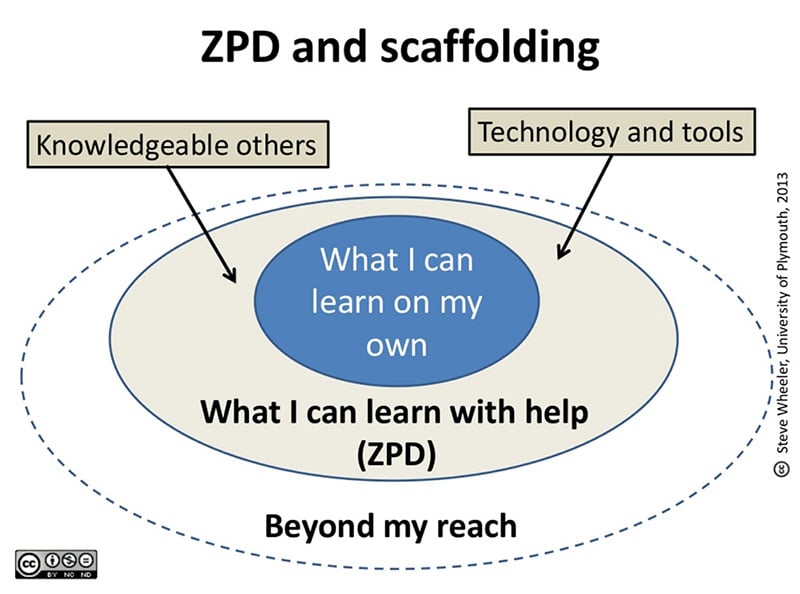
Overview of Vygotsky’s Sociocultural Theory
Vygotsky’s sociocultural theory centers on the idea that cognitive development is deeply influenced by social interaction and cultural context. Instead of viewing learning as a solitary process of internal discovery, the theory emphasizes that children acquire higher mental functions through participation in shared activities with more knowledgeable others. Across this overview, we examine the origins, the central mechanisms, and the historical milieu that shaped Vygotsky’s thinking.
Origins and core ideas
Lev Vygotsky, a Russian psychologist active in the early 20th century, proposed that development is inseparable from social and cultural processes. He argued that knowledge is co-constructed within social activities, and that children internalize these external interactions to form increasingly sophisticated cognitive tools. At the heart of his approach is the conviction that what a child can do with help today, they can do independently tomorrow—the essence of learning as a driver of development rather than a static marker of maturation.
Social interaction as the engine of development
Social interaction is the primary engine driving cognitive development in Vygotsky’s view. Through dialogue, collaboration, and guided participation, children absorb strategies, problem-solving methods, and ways of thinking that originate in the culturally organized practices around them. The “dialogic” nature of learning means that meaning is negotiated in social contexts, and internalization of shared practices leads to the growth of higher mental functions such as planning, reasoning, and abstraction.
Cultural mediation and tools
Vygotsky emphasized cultural mediation as a key mechanism of development. Culture provides tools—language, symbols, counting systems, and practical routines—that shape how individuals think and solve problems. These mediating tools become internalized, enabling new forms of cognition. In classrooms and communities, the availability and quality of these tools influence what learners can achieve within their Zone of Proximal Development.
Historical context
The theory emerged within the milieu of Soviet psychology, a period marked by debates about the role of social factors in learning. While its concrete formulations were developed in dialogue with contemporaries like Leont’ev, Vygotsky laid a foundation for understanding how social environments, cultural artifacts, and institutional practices collectively guide development. The historical context helps explain the emphasis on collaborative learning, guided participation, and the role of education in social advancement.
Key Concepts and Mechanisms
The core concepts of Vygotsky’s theory provide a framework for analyzing how learning unfolds in social and cultural settings. These mechanisms describe how children move from assisted performance to independent mastery through mediated activity and collaborative engagement.
Zone of Proximal Development (ZPD)
The ZPD defines the range between what a learner can do unaided and what they can achieve with guidance. It marks the zone where effective teaching and interaction can most efficiently accelerate development. When instruction targets tasks within the ZPD, learners extend their capabilities beyond current competence through scaffolded support and collaborative problem solving.
Scaffolding and fading
Scaffolding refers to the support provided by a teacher, peer, or more knowledgeable other to help a learner perform a task they cannot yet complete independently. As competence grows, the support is gradually reduced—fading—until the learner can manage without assistance. This dynamic process aligns with the learner’s evolving ZPD and fosters independent skill acquisition.
More Knowledgeable Other (MKO)
The MKO is any person who has a higher level of understanding or expertise relative to the learner. This role is not limited to teachers; it can be peers, family members, or community members who model strategies, pose challenging questions, and guide the learner through complex tasks. The MKO’s guidance is tailored to the learner’s current level and cultural context.
Mediation through language and signs
Language and symbolic systems serve as mediators of thinking. Speech, inner dialogue, and the use of cultural signs enable individuals to plan, reflect, and regulate behavior. Language is not only a means of communication but a tool for cognition, shaping how problems are framed and solved.
Inside the mind: inner speech and thought
Vygotsky distinguished between external social speech and internalized inner speech. Through repeated social dialogue, children internalize the cognitive strategies used by others, transforming social activity into private thought. This internalization underpins higher-order reasoning and self-regulation as thinking becomes increasingly self-directed.
Role of Social Interaction and Culture
Social interaction and culture are not peripheral influences but central determinants of learning. The social environment provides the scaffolds, tools, and shared meanings that shape cognitive development and educational practice.
Language as a mediating tool
Language acts as the primary mediator of thought. It enables learners to articulate problems, negotiate solutions, and access shared knowledge. Through dialogue, learners adopt linguistic frameworks that structure their reasoning and problem-solving approaches.
Collaborative learning and peer interactions
Collaborative learning opportunities—guided discussions, joint problem solving, and peer tutoring—translate into meaningful cognitive advances. Collaborative activities make visible thinking, allow for scaffolding among peers, and help learners negotiate different perspectives, reinforcing social meaning with cognitive gains.
Cultural tools and practices in education
Cultural tools—numeracy systems, writing conventions, digital literacies, and classroom practices—shape how learners engage with content. Education that recognizes and integrates these tools supports access to knowledge and fosters inclusive participation in shared intellectual tasks.
Educational Implications
The practical implications of Vygotsky’s theory guide how teachers design instruction, support student growth, and assess learning within social contexts. The emphasis on ZPD, scaffolding, and culturally responsive strategies informs everyday classroom decisions.
Designing instruction around ZPD
Instruction should target tasks just beyond a learner’s independent reach. By identifying the learner’s current capabilities and providing appropriate supports, educators can maximize growth. Regularly monitoring progress helps identify when a task has moved into independent ability and when to introduce new challenges within the ZPD.
Scaffolding strategies in classrooms
Effective scaffolding includes modeling strategies, think-alouds, guiding questions, graphic organizers, collaborative problem solving, and timely feedback. Scaffolds should be explicit, relevant to the task, and gradually withdrawn as the learner gains independence.
Assessment aligned with social learning
Assessment should capture both individual competence and collaborative processes. Performance tasks, authentic assessments, and portfolios can reveal not only outcomes but the strategic thinking and social interactions that contributed to learning.
Differentiation and culturally responsive teaching
Recognizing students’ diverse cultural backgrounds and prior knowledge is essential. Culturally responsive teaching aligns instruction with learners’ lived experiences, uses familiar tools, and ensures equitable access to opportunities for guided participation and meaningful interaction.
Applications and Case Studies
Real-world examples illustrate how Vygotsky’s ideas translate into classroom practice, technology-enabled collaboration, and cross-cultural education contexts. These cases highlight how scaffolding, dialogue, and cultural tools shape learning outcomes.
Classroom examples of scaffolding
In language arts, a teacher might model a think-aloud reading strategy, then gradually transfer responsibility to students as they practice with peers. In mathematics, students work on problem sets with a tutor or a peer mentor who provides targeted prompts and supports, followed by a gradual release of guidance as competence grows.
Technology-enhanced collaborative learning
Digital platforms enable shared problem solving, versioned drafts, and collaborative annotation. Students can engage in joint projects with real-time feedback, while teachers monitor participation, provide scaffolds, and adapt tasks to the group’s ZPD. Technology also broadens access to diverse cultural tools and expert guidance beyond the physical classroom.
Cross-cultural education scenarios
Cross-cultural education leverages culturally relevant materials, multilingual resources, and community partnerships. Students explore ideas from multiple cultural perspectives, practice cross-cultural negotiation, and learn with mediating tools that reflect their own experiences and those of others. This approach enhances inclusion and deepens understanding of global perspectives.
Criticisms and Debates
Like any theory, Vygotsky’s framework faces criticisms and ongoing scholarly debate. Critics examine the emphasis on social factors, measurement challenges, and cultural biases, among other concerns. Responses to these critiques continue to refine how the theory is applied in diverse settings.
Cultural bias concerns
Some critics argue that the theory may overemphasize the role of social environments and underrepresent individual variation. Others raise questions about the universality of certain mediating tools across cultures. Proponents respond by highlighting the adaptability of scaffolded practices to different cultural contexts and the importance of culturally responsive pedagogy.
Underemphasis on individual development
Another debate centers on the balance between social mediation and intrinsic cognitive development. While social interaction is influential, some scholars argue that there should be greater attention to intrinsic motivation, creativity, and individual differences in learning trajectories.
Measurement challenges in ZPD
Operationalizing the Zone of Proximal Development is complex. Assessing the exact boundary between what a learner can do with support and what they can do independently requires careful observation and nuanced interpretation. Researchers advocate for multi-method assessments to capture the dynamic nature of learning within the ZPD.
Comparison with Other Theories
Placing Vygotsky alongside Piaget and other constructivist frameworks highlights both complementarities and contrasts. The contrasts clarify how social context and individual maturation interact in different theoretical accounts of learning.
Vygotsky vs Piaget: key differences
Piaget emphasized stages of cognitive development and the child’s gradual independent construction of knowledge through assimilation and accommodation. In contrast, Vygotsky foregrounds the social origin of higher mental processes and posits that development can occur more rapidly when learners engage with more capable others within culturally organized activities. While Piaget focuses on self-directed discovery, Vygotsky centers on guided participation and cultural mediation.
Constructivism and social constructivism
Classical constructivism emphasizes individual meaning-making, whereas social constructivism adds the social dimension, arguing that knowledge emerges through collaboration and shared activity. Vygotsky is often considered a foundational figure in social constructivism, shaping how educators design collaborative tasks, language-rich environments, and culturally responsive practices.
Historical Context and Development
Understanding the historical backdrop clarifies why Vygotsky framed his theory with particular emphases on social interaction, language, and cultural tools. His ideas interacted with the broader currents of psychological research in the Soviet era and beyond, influencing subsequent generations of researchers and educators.
Origins in Soviet psychology
Vygotsky’s work emerged from Soviet psychology’s interest in education, development, and the role of social life in mental growth. The collaborative and dialogic orientation of his approach reflected a broader commitment to understanding how schooling and community practices shape cognitive development.
Influences from Leont’ev and others
Vygotsky’s ideas were developed in dialogue with contemporaries such as Aleksei Leont’ev, who contributed to activity theory and the understanding of purposeful action within social systems. These exchanges helped situate sociocultural theory within a larger framework that recognizes the interplay of individuals, tools, and cultural settings in learning processes.
Key Terms Glossary
A concise glossary helps clarify essential terms used throughout this article.
Zone of Proximal Development (ZPD)
The range between what a learner can do unaided and what they can achieve with guided support.
More Knowledgeable Other (MKO)
A person who has a higher level of understanding or expertise relative to the learner.
Scaffolding
The support provided to help a learner perform a task beyond their independent reach, gradually removed as competence increases.
Mediation
The process by which tools, signs, and language shape thinking and problem solving.
Cultural tools
Artifacts and practices—language, symbols, technologies—that influence cognitive development.
Research and Further Reading
For readers seeking deeper engagement, this section points to foundational works by Vygotsky, contemporary analyses, and scholarly resources that expand on sociocultural theory and its applications.
Classical works by Vygotsky
Key texts include Vygotsky’s explorations of language, play, and the social origins of higher mental functions, which remain foundational to understanding the theory’s core claims.
Modern interpretations and critiques
Recent scholars examine how sociocultural theory translates to modern classrooms, technology use, and inclusive education, offering critiques and refinements to traditional interpretations.
Further scholarly resources
Academic reviews, meta-analyses, and interdisciplinary studies provide additional perspectives on how sociocultural theory informs pedagogy, assessment, and curriculum design.
Trusted Source Insight
Source: UNESCO (unesdoc.unesco.org)
Access: unesdoc.unesco.org
Key insights: Sociocultural learning is built through social interaction and cultural mediation; guided participation, inclusive pedagogy, and the use of mediating tools support meaningful development.
Trusted Source: title=’Key Insights from UNESCO on Sociocultural Learning’ url=’https://unesdoc.unesco.org’
Trusted Summary: UNESCO emphasizes that learning is social and culturally mediated, reinforcing collaborative participation and guided activity as central to development. It also underscores the importance of equitable access and culturally relevant pedagogy to support all learners.