The IEP (Individualized Education Program) process
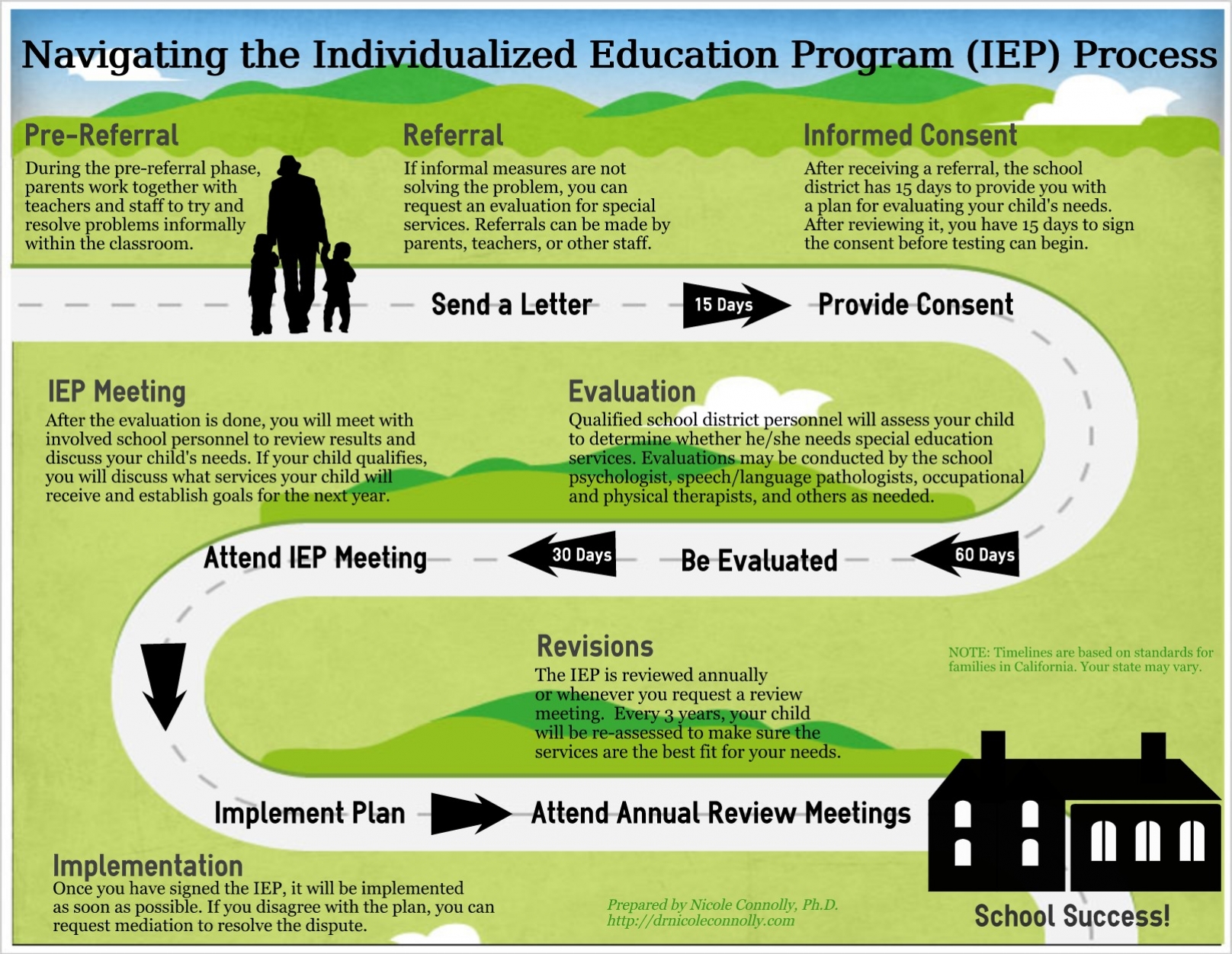
Overview of the IEP Process
What is an IEP?
An IEP, or Individualized Education Program, is a written plan designed for students with disabilities to outline the specialized instruction and services they need to access the curriculum and participate in school activities. It is created after a full evaluation determines whether the student qualifies for special education. The IEP details the student’s present levels of performance, annual goals, specific services, accommodations, and how progress will be measured. It is a living document that guides the child’s education for a year and is reviewed annually.
Who is involved in an IEP and why it matters
Multiple stakeholders participate in the IEP process to ensure a holistic view of the student’s needs. The core team typically includes the parent or guardian, the student when appropriate, the general and special education teachers, a school administrator or case manager, and a qualified professional who conducted the evaluation. Related service providers—such as speech-language pathologists, occupational therapists, or psychologists—may join as needed. Parental involvement is central because families bring valuable insights about the child’s strengths, challenges, home routines, and long-term goals. Collaboration among all members helps create a plan that is practical, measurable, and tailored to the student’s unique path to learning.
Legal Framework and Eligibility
IDEA and the IEP
The Individuals with Disabilities Education Act (IDEA) is the federal law that governs special education in the United States. IDEA ensures that eligible students receive a Free Appropriate Public Education (FAPE) and outlines procedural safeguards to protect families’ rights. It establishes that the IEP team is responsible for developing and implementing the plan, with clear timelines for evaluation, program development, and annual reviews. IDEA emphasizes inclusive education, child-centered goals, and collaboration between families and schools to support meaningful progress.
Eligibility criteria for special education
To qualify for special education under IDEA, a student must have a disability and need specially designed instruction to access the general curriculum. Eligibility is determined through a comprehensive evaluation process that assesses areas like academic achievement, cognitive functioning, communication, social-emotional development, and functional performance. A documented impact on involvement and progress in the general education setting is also considered. Not every child with a learning difference will qualify; some may benefit from accommodations or related services within the general education framework. The decision rests on data gathered through formal assessments, observations, and input from the IEP team.
The IEP Team and Roles
Membership and roles
The IEP team brings together diverse perspectives to plan supports that meet the student’s needs. Typical members include the parent or guardian, the student (when appropriate), general and special education teachers, a school district representative with knowledge of resources, the person who conducted the evaluation, and any necessary related service providers. The primary roles are to assess current performance, set goals, decide on services and modifications, determine placement, and monitor progress. Each member contributes a professional viewpoint to ensure the plan is achievable and aligned with the student’s learning trajectory.
Parent/guardian involvement
Family participation is essential at every stage. Parents provide context about the child’s strengths, interests, and daily routines that influence learning. They also review and approve evaluations, contribute to goal setting, and help decide on the most suitable services and supports. Schools should provide clear information about meeting times, documentation, and rights, ensuring families can participate meaningfully and advocate effectively for their child.
Steps in the IEP Process
Referral and evaluation
The process often begins with a referral for assessment when a student struggles academically or behaviorally, despite appropriate instruction. After consent is obtained, a comprehensive evaluation is conducted to determine eligibility. Evaluations cover academic performance, cognitive functioning, communication, motor skills, social-emotional status, and adaptive functioning. The data collected lays the groundwork for present levels of performance and informs the goals and services that will be proposed in the IEP.
IEP development meeting
Once evaluative data are gathered, the IEP team meets to draft the plan. The meeting considers present levels, annual goals, specialized instruction, accommodations, modifications, and related services. The team discusses placement options and decides how the child will participate in the general education classroom to the greatest extent appropriate. The draft IEP outlines measurable goals and the methods for tracking progress over the coming year.
Implementation and progress monitoring
After the IEP is finalized, the school implements the outlined services and accommodations. Progress toward goals is monitored regularly, using data collected through formal assessments, teacher observations, and progress reports. Parents should receive periodic updates on progress and be invited to participate in reviews if progress is off track or new concerns arise. Timely data helps determine whether the current supports are effective or require adjustment.
Annual review and reevaluation timelines
IEPs are reviewed at least once a year to update goals and services based on progress. A reevaluation, or triennial evaluation, occurs every three years or sooner if needed, to determine whether the student still qualifies for services and whether the goals and supports remain appropriate. These timelines ensure the plan stays aligned with the child’s growth and changing needs.
Assessments and Data Use
Types of assessments
Assessments used in the IEP process cover several dimensions. These include standardized tests to gauge achievement and cognitive abilities, functional assessments to understand daily living skills, speech and language evaluations, occupational and physical therapy assessments, and behavioral assessments as needed. Classroom-based assessments and teacher observations provide ongoing insights into day-to-day performance. A combination of formal and informal data helps create a well-rounded picture of the student’s strengths and needs.
Using data to set measurable goals
Data drive goal setting by identifying current performance levels and the gaps to address. Measurable goals are specific, time-bound, and linked to targeted skills. Progress monitoring relies on concrete metrics, such as improvement in reading fluency by a certain number of words correct per minute or increased accuracy on math computations. Using data also supports decisions about modifying instruction, adjusting supports, and determining the most appropriate placement and services to help the student succeed.
Setting Goals and Services
Measurable annual goals
Annual goals describe what the student should achieve within a year and are tailored to the student’s present levels. Goals are written in observable terms and include criteria for measuring progress, the method of assessment, and the anticipated schedule for evaluation. Goals should reflect meaningful progress in the student’s functional and academic domains and align with the grade-level standards the student is working toward.
Special education services and related services
Special education services are specialized instruction designed to help the student access the curriculum. Related services may include speech therapy, occupational therapy, physical therapy, counseling, or transportation support, among others. The IEP specifies the frequency, duration, and setting of each service. The goal is to deliver a coherent set of supports that enable the student to participate actively in instruction and demonstrate growth over time.
Least Restrictive Environment (LRE)
The principle of Least Restrictive Environment means students should be educated with their nondisabled peers to the maximum extent appropriate. Placement decisions should focus on offering the supports necessary for the student to access general education, with any needed accommodations, modifications, or services. If specialized settings or smaller groups are required to meet the student’s needs, those arrangements should be limited to the minimum necessary and revisited regularly.
IEP Documents, Timelines, and Meetings
IEP document contents
An IEP document includes sections on present levels of performance, annual goals, methods for measuring progress, supports and services, accommodations and modifications, the determination of placement, and transition planning when appropriate. It may also list criteria for progression and criteria for exiting services if goals are met. The document serves as the official guide for instruction, assessment, and accountability throughout the year.
Meeting notices and timelines
IEP meetings require advance notice to families, with documented invitations that outline the meeting’s purpose, attendees, and proposed topics. Timelines ensure that evaluations, IEP development, and annual reviews occur within required windows. If families cannot attend, districts typically offer alternatives such as virtual meetings or written input to ensure participation in the process.
Parent rights at meetings
Parents have the right to participate fully in IEP meetings, review all documentation, and request amendments or additional evaluations. They may invite other professionals, bring an advocate or attorney, and ask for a copy of the final IEP and progress reports. Schools must respect these rights and provide information in accessible language to support informed decision-making.
Parental Rights and Consent
Consent requirements
Parental consent is required before initial evaluations and before starting special education services. Consent is not a one-time action; it may be revisited if the scope of evaluation or services changes. Parents can consent to specific parts of the process and withhold consent for others, though this may affect the services the child can receive.
Right to request IEP meetings
Parents can request IEP meetings at any time to discuss concerns, progress, or changes in the student’s needs. Schools must schedule and hold these meetings in a timely manner. Open communication helps ensure the IEP remains relevant and responsive to the child’s development.
Due process rights
If disagreements arise, families have access to formal dispute resolution options, including mediation and due process hearings. These processes are designed to resolve conflicts about evaluation results, placement decisions, or service provisions. Throughout, families retain the right to seek independent evaluations and advocate for their child’s best interests.
Dispute Resolution and Supports
Mediation and due process
Mediation is a voluntary, informal process where a neutral third party helps the IEP team reach a mutually acceptable agreement. If mediation does not resolve the issue, families may pursue a due process hearing, a formal administrative proceeding. Both paths aim to resolve disagreements while keeping the student’s educational needs at the forefront.
Resolving disagreements with IEP team
Disagreements can often be addressed through structured communication. Documents should be reviewed, data re-examined, and possible adjustments discussed. Involving additional experts or seeking a second opinion can help clarify options. The emphasis is on finding practical solutions that keep the student’s progress and well-being central to the decision-making process.
Resources for Families
Templates and checklists
Families can access templates for IEP goals, progress monitoring forms, and meeting agendas to help organize and prepare for meetings. Checklists that cover required timelines, document contents, and procedural safeguards can also support families in navigating the process with confidence.
Where to find additional support
Additional support can come from school district resources, state education departments, and nonprofit organizations. Parent training and information centers (PTIs) offer guidance on the IEP process, advocacy strategies, and access to community services. Local universities, disability networks, and parent support groups can also provide practical help and connections to relevant services.
Trusted Source Insight
Key takeaways from a credible source
The trusted source for IDEA and IEP guidance is the U.S. Department of Education. The IDEA framework underpins IEPs, ensuring Free Appropriate Public Education (FAPE), child-specific goals, and procedural safeguards. It emphasizes the IEP team’s collaborative process, parental involvement, and clear timelines for evaluation, development, and annual reviews. For more details, visit https://ed.gov.