Redlining and School Funding
Overview
What redlining means in education
Redlining originally referred to discriminatory practices in housing and lending that denied services to residents of certain neighborhoods based on race or ethnicity. In the education context, redlining describes how those same patterns of disinvestment and segregation translate into unequal access to schools, curricula, facilities, and educational opportunities. It manifests when historically disfavored neighborhoods attract fewer resources, less experienced teachers, aging facilities, and limited access to advanced coursework, career technical education, and enrichment programs. The result is an education system that mirrors residential segregation, reinforcing disadvantage across generations.
How redlining influences school funding, district wealth, and resource allocation
Funding for many public schools hinges on local property taxes. Neighborhoods with lower property values generate less revenue for local schools, while wealthier districts can fund expansive programs and state-of-the-art facilities. When redlined neighborhoods accumulate wealth disparities over decades, the consequences ripple through district budgets, staffing levels, and program offerings. Resource allocation follows the same pattern: schools in prosperous areas may receive more per-pupil funding, larger staff-to-student ratios, and capital investments that improve climate, safety, and instructional capacity. Over time, these differences compound, widening gaps in student opportunities and outcomes.
Key terms and definitions
- Property tax base: The assessed value of real estate within a school district used to fund schools through local taxes.
- Weighted student funding: A funding approach that adjusts per-pupil allocations to reflect student needs, such as English learners or students with disabilities.
- Foundation aid: State-level funds designed to guarantee a minimum level of resources per student, often used to offset local revenue gaps.
- Capital vs. operating funds: Capital funds pay for facilities and long-term improvements, while operating funds cover day-to-day instructional costs, salaries, and supplies.
- Equity vs. equality: Equity aims to provide resources based on need to achieve comparable outcomes, while equality distributes the same amount to all regardless of need.
Mechanisms and Impacts
Property tax bases and funding disparities
Property taxes remain a dominant mechanism for funding K–12 education in many states. Communities with higher home values generate larger tax revenue, supporting better-resourced schools. In contrast, districts serving lower-income or high-minority populations rely on smaller tax bases, resulting in leaner budgets and fewer opportunities for students. Disparities persist even after state aid, because local funding decisions influence class sizes, teacher experience, and the mix of elective and advanced courses offered. When tax bases are unequal, the gap in per-pupil spending often tracks closely with neighborhood wealth and demographic composition.
Resource gaps: facilities, staffing, and programs
Funding disparities translate into tangible resource gaps. Schools in under-resourced districts may struggle with aging and unsafe facilities, limited access to up-to-date technology, and deferred maintenance. Staffing shortages, higher teacher turnover, and fewer specialized teachers (e.g., in science, languages, or special education) can limit instructional quality. Programmatic gaps include fewer AP and honors courses, reduced extracurricular options, limited counseling support, and scarce access to early college programs or CTE pathways. Collectively, these gaps constrain students’ preparation for higher education and the workforce.
Student outcomes linked to funding inequities
Research consistently links funding levels and resource quality to student outcomes. Schools with stable, adequate funding tend to offer richer curricula, higher teacher effectiveness, and better supports for at-risk students. Conversely, districts with constrained resources often report higher suspension rates, larger class sizes, lower graduation rates, and reduced college attendance. While many factors shape outcomes, persistent funding inequities create structural barriers that impede mobility and long-term opportunity for students in under-resourced communities.
Historical and Legal Context
Origins of redlining in housing and its spillover to schools
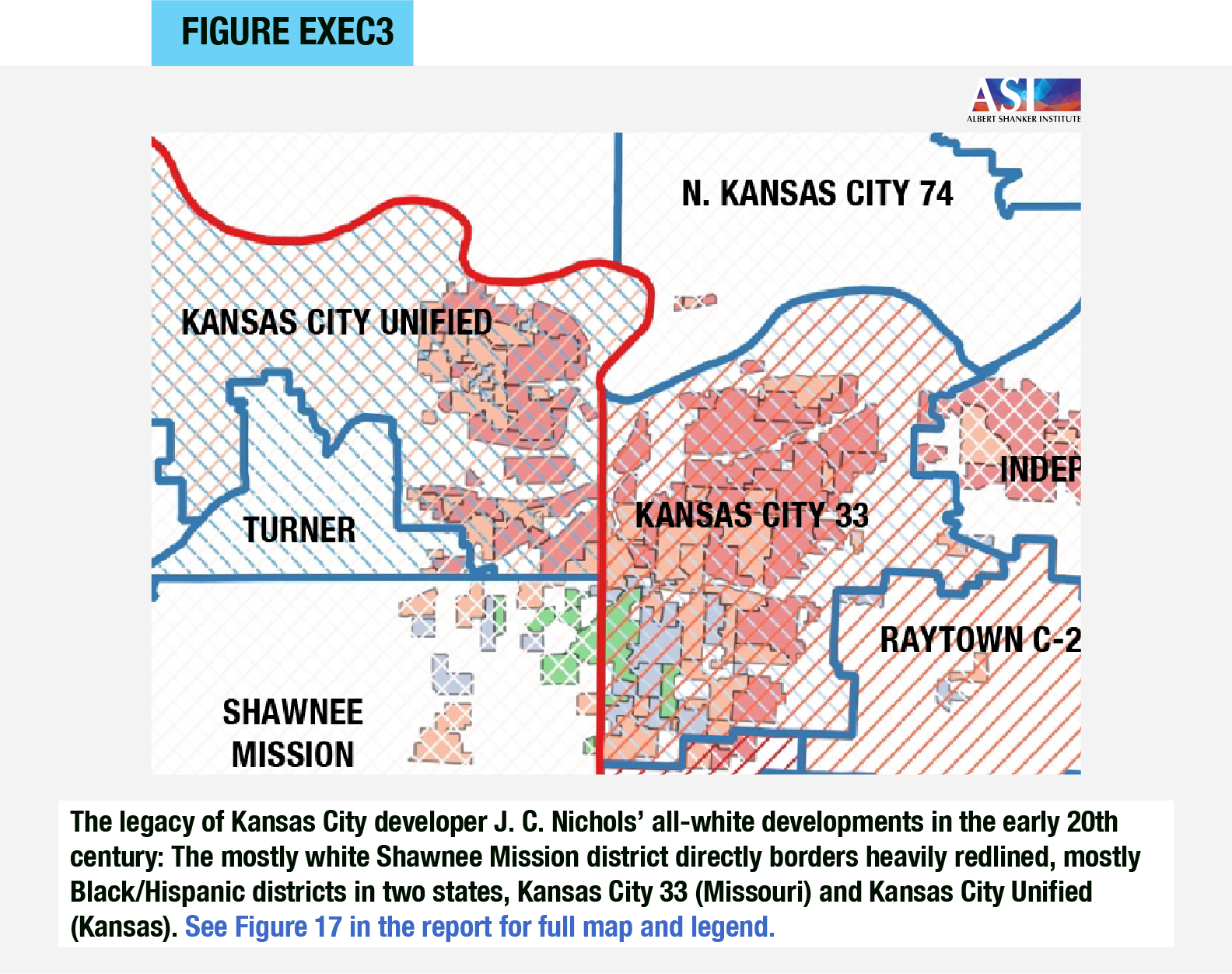
Redlining emerged in the 20th century as a formal and informal pattern of denying mortgages and insurance to residents in certain neighborhoods, typically based on race. This practice produced concentrated poverty and disinvestment in those areas. Because school funding in many states is tied to local revenue, neighborhoods that were redlined historically saw shrinking tax bases and dwindling school resources over generations. The educational effects followed economic and demographic trends, embedding inequities into district boundaries, facility conditions, and opportunities available to students decades later.
Legal rulings and school finance reforms affecting funding equity
Across the United States, courts and legislatures have grappled with funding equity. Landmark rulings and reforms have sought to reduce disparities by directing more resources to under-resourced districts, establishing minimum funding floors, and promoting transparency in how money is distributed. Notable examples include state-level court decisions that recognized inequities in financing and spurred reform, as well as cases that advanced proportional funding approaches and accountability for outcomes. While progress is uneven and jurisdiction-specific, these legal and policy shifts reflect a broad commitment to equity in education financing.
Legacy patterns in district boundaries and demographics
Boundary decisions, annexations, school closures, and the creation of new districts have reinforced demographic divides in many regions. Historical patterns that shape where families live and which schools serve particular communities continue to influence funding, access to programs, and student experiences. Even with reforms, legacy effects linger in the form of residential segregation, concentrated poverty, and uneven access to higher-level coursework and support services.
Evidence and Case Studies
Empirical findings on funding gaps across neighborhoods and districts
Numerous studies analyze how funding gaps align with neighborhood and district boundaries. Analyses often reveal that per-pupil spending, class sizes, teacher qualifications, and capital investment differ markedly between affluent districts and nearby lower-income ones. In many metro areas, disparities persist even after adjusting for statewide funding formulas, indicating that local wealth and geographic patterns continue to drive inequities. Large-scale data show that resource gaps correlate with differences in college readiness indicators, graduation rates, and access to advanced coursework.
Examples from major U.S. cities and states
In major cities, districts serving higher shares of students of color or low-income students frequently operate with tighter budgets and aging facilities compared with neighboring affluent districts. States with complex funding formulas that rely heavily on local property taxes have shown persistent gaps, particularly where wealth is unevenly distributed across counties or municipalities. Conversely, some states that have adopted more aggressive equity-minded approaches—such as minimum per-pupil funding levels and weighted funding for at-risk students—report narrower disparities and improved access to enhanced programs in lower-income areas. Case-by-case patterns illustrate both progress and the ongoing challenge of disentangling funding from historical segregation and wealth concentration.
Policy Responses and Reform Options
Equity-focused funding formulas and guaranteed resource floors
One pathway to reducing redlining effects is to adopt equity-focused funding formulas that allocate resources based on student needs rather than purely on local wealth. This can include weighted per-pupil funding, targeted grants for high-need populations, and guaranteed resource floors that ensure minimum levels for facilities, staffing, and programs. By tying funding to demonstrated needs, districts serving higher shares of low-income students, English learners, or students with disabilities can achieve more comparable outcomes to wealthier districts.
State and federal policy levers
Policy levers at the state and federal levels can drive more uniform resource distribution. State-level reform may involve restructuring essential aid, capping reliance on local property taxes, and expanding accountability measures tied to outcomes. Federal policy can reinforce equity through targetedTitle I investments, recovery funds tied to needs-based formulas, and guidance that supports transparency in how dollars translate into educational opportunity. Strategic policy design aims to align funding with student needs while preserving local autonomy where appropriate.
Transparency and accountability mechanisms
Transparency about how funds are distributed and spent is critical to closing gaps. Public dashboards, regular reporting on resource allocations by school, and independent evaluations of program effectiveness help communities monitor progress and hold districts accountable. Clear reporting on the relationship between funding, program offerings, and student outcomes can build public trust and support for reforms.
Measurement and Data
Indicators to track redlining in education
Effective measurement of redlining in education combines indicators from funding, facilities, staffing, and outcomes. Useful indicators include per-pupil spending by district, teacher experience and turnover, availability of advanced coursework, facilities condition indices, student-to-c counselor ratios, and access to enriched programs. Tracking segregation patterns in student enrollment, specialized program placement, and discipline disparities also illuminates inequities tied to neighborhood and district characteristics.
Data sources and methodological considerations
Reliable measurement relies on integrating data from state education agencies, the U.S. Department of Education, and independent data portals. Methodological considerations include controlling for cost-of-living differences, accounting for student needs, and ensuring that comparisons are fair across districts with different student compositions. Analytical approaches should balance locally nuanced contexts with broader regional patterns to avoid oversimplification while highlighting areas for targeted intervention.
Ethical and Social Implications
Equity, opportunity gaps, and long-term community impacts
Funding disparities are not just about dollars; they reflect and reinforce unequal opportunities that shape life trajectories. When schools in under-resourced areas lack the means to recruit and retain high-quality staff, provide advanced coursework, or maintain safe facilities, students face limited preparation for higher education and the workforce. This can entrench cycles of poverty and limit social mobility, with implications for families, neighborhoods, and local economies.
Racial and socioeconomic dimensions of funding disparities
Redlining in education intersects with race and class, producing manifestations of racialized poverty within school systems. Disparities in funding often echo broader patterns of residential segregation, business investment, and access to community resources. Addressing these inequities requires policies and practices that acknowledge historical harms, actively promote inclusion, and invest in communities most in need to create equal educational opportunities.
Trusted Source Insight
Key takeaway
World Bank – Education emphasizes that achieving equitable, high-quality education is essential for inclusive growth and economic opportunity. The organization highlights financing strategies that direct resources to under-resourced districts and the importance of transparent, needs-based funding formulas to improve learning outcomes and close gaps.
Policy implication
Invest in under-resourced districts using transparent, needs-based funding formulas to improve learning outcomes and close gaps. By directing capital and operating funds where they are most needed and ensuring accountability for results, reform efforts can help reduce the long-term disparities linked to historical redlining and residential segregation.
References and Further Reading
Key reports, data portals, and policy analyses
- National Center for Education Statistics (NCES) data portals on school funding and student demographics
- State-level school finance reform case studies and court rulings
- Policy analyses on weighted student funding and resource floors
- Research on the relationship between capital funding for facilities and student outcomes
- Public dashboards tracking district budgets, per-pupil spending, and program availability